
The Dollar Trap
How the U.S. Dollar Tightened Its Grip on Global Finance
Reviewer: Ian Harwood, Redburn
Looks at how the American dollar came to be of central importance in the world economy, and why it will continue to be so for the foreseeable future, due to a firmly established, dollar-centric international finance system.

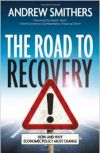
The Road To Recovery
How and Why Economic Policy Must Change
Reviewer: Mark Cleary, Kinetic Economics
Providing practical guidance on reducing government, household and business debt, a well-respected economist stresses the importance of revising the neoclassical consensus governing global-economic decision-making to avoid the next financial collapse.
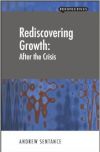
Rediscovering Growth
After the Crisis
Reviewer: David Smith, Economics Editor, Sunday Times
Andrew Sentance rightly identifies a number of key lessons for policymakers today as they seek to deliver a balanced and sustainable growth path going forward.
Double Entry
How the Merchants of Venice created Modern Finance
Reviewer: Rosemary Connell
Describes the history of accounting and double-entry bookkeeping from Mesopotamia to the Renaissance to modern finance and explains how a system developed that could work across all trades and nations.

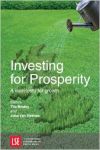
Investing for Prosperity
A Manifesto for Growth
Reviewer: Vicky Pryce
What institutions and policies are needed to sustain UK economic growth in the dynamic world economy of the twenty-first century?
GDP: A brief but affectionate history
Reviewer: Bill Allen
Looks at the history of the complex Gross Domestic Product statistic, from its precursors to its use today, giving insight into what it measures, how it has changed, and what its strengths and weaknesses are.

The New Tycoons
Inside the Trillion Dollar Private Equity Industry that Owns Everything
Reviewer: Nooman Haque
Taking readers behind the scenes of private equity firms and into the secret worlds of founders Henry Kravis, Steve Schwarzman and others, this revealing book examines one of the most important trillion-dollar corners of the global economy that has transformed the industry.

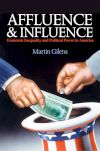
Affluence & Influence
Reviewer: David Fell, Director, Brook Lyndhurst
Given the manifest political, social and environmental difficulties with which the world is now grappling, in large part as a result of the failure of a very particular economic ideology, Robinson's entreaty is surely now more important than ever.
The Price of Inequality
Reviewer: Mark Cleary, Consultant Economist, Kinetic Economics
There is something rotten in the state of Denmark, or as Joseph Stiglitz puts it, America. Stiglitz tells us that 20% of Americans own 85% of America's wealth. This is, as he points out, not a happy state of affairs.

First Principles
Five Keys to Restoring America’s Prosperity
Reviewer: Stephen Hannah, Lecturer in Economics, NYU in London
This is a pre-election, pro-Republican polemic with a glowing recommendation from Congressman Ryan. So you should not be surprised by the content and its tone. However, you may well be disappointed, even saddened, by the argument.
Lost Causes
The Retreat from Classical Liberalism
Reviewer: Dame Kate Barker
Lost Causes is Professsor Lal's collected thoughts on the state of the United Kingdom today, taken from pamphlets compiled for various UK think tanks from the late 1980s.
Good Strategy; Bad Strategy
The Difference and why it Matters
Reviewer: Rebecca Harding
Even though everyone is talking about it, there is no concept in business today more muddled than 'strategy'. Richard Rumelt, described by McKinsey Quarterly as 'a giant in the field of strategy' and 'strategy's strategist', tackles this problem head-on in a jargon-free explanation of how to develop and take action on strategy, in business, politics and beyond

How Do We Fix This Mess?
The Economic Price of Having It All And The Route to Lasting Prosperity
Reviewer: Diane Coyle, Enlightenment Economics
In Robert Peston's book he explains in his characteristically straightforward way how the world got itself into the current economic mess - and how we might get out of it.
'How do we fix this mess? I don't know. But don't stop reading now. Perhaps if we have a clearer understanding of what went wrong, we'll have a better idea of what needs to be done. This book is a map of what needs to be fixed.'

New Ideas on Development After The Financial Crisis
Reviewer: Mark Henstridge, Chief Economist, Oxford Policy Management
Editors Nancy Birdsall and Francis Fukuyama bring together leading scholars to explore the implications of the global financial crisis on existing and future development strategies.

Whats the Use of Economics?
Teaching the Dismal Science After the Crisis
Reviewer: Peter Sinclair, Emeritus Professor of Economics, University of Birmingham
With the financial crisis continuing after five years, people are questioning why economics failed either to send an adequate early warning ahead of the crisis or to resolve it quickly. The gap between important real-world problems and the workhorse mathematical model-based economics being taught to students has become a chasm. This book examines what economists need to bring to their jobs, and the way in which education in universities could be improved to fit graduates better for the real world.

…And the Pursuit of Happiness
Reviewer: Henry Stuart, Happy Computers
In spite of general reductions in government spending, the prime minister has found room in the government's budget to spend money on a major survey of what makes the British people happy.Tthis monograph provides a substantial challenge to those who want to put the explicit pursuit of well-being at the heart of government policy.

Economics After the Crisis
Reviewer: Bill Allen, Formerly Deputy Director, Bank of England
The global economic crisis of 2008–2009 seemed a crisis not just of economic performance but also of the system's underlying political ideology and economic theory. But a second Great Depression was averted, and the radical shift to New Deal-like economic policies predicted by some never took place. Perhaps the correct response to the crisis is simply careful management of the macroeconomic challenges as we recover, combined with reform of financial regulation to prevent a recurrence. In Economics After the Crisis, Adair Turner offers a strong counterargument to this somewhat complacent view.

Paper Money Collapse
The Folly of Elastic Money and the Coming Monetary Breakdown
Reviewer: Dave Birch, Consult Hyperion
Drawing upon novel new research, Paper Money Collapse conclusively illustrates why paper money systems—those based on an elastic and constantly expanding supply of money as opposed to a system of commodity money of essentially fixed supply—are inherently unstable and why they must lead to economic disintegration.

Exceptional People
How Migration Shaped Our World and Will Define Our Future
Reviewer: Chola Mukanga, The Zambian Economist
In Exceptional People, the authors carry out an even-handed assessment of the costs and benefits of international migration. They find that all involved - the countries that receive immigrants, those that send them, and immigrants most of all - prosper when movement across borders is allowed without hindrance.

The Evolution of Great World Cities
Reviewer: Professor Henry Overman, London School of Economics
The Evolution of Great World Cities unfolds through the tales of several urban centres - including Venice, Amsterdam, London, and New York City - at key junctures in their histories.
