
The Evolution of Money
Reviewer: Bridget Rosewell, Volterra Partners
The sharing economy’s unique customer to company exchange is possible because of the evolution of money. These transactions haven’t always been as fluid as they are today, but they are likely to become even more so in the future. It is therefore critical that we learn to appreciate money’s elastic nature as deeply as do Uber, Airbnb, Kickstarter, and other leading innovators, and that we better comprehend money’s transition from hard currencies to cryptocurrencies, such as Bitcoin, to access their cooperative potential. The Evolution of Money illuminates this fascinating reality, focusing on the tension between currency’s real and abstract properties and advancing a vital theory of money rooted in this dual exchange.

Strained relations
US foreign exchange operations and monetary policy in the twentieth century
Reviewer: William A Allen, Economic & Financial Consultant
Drawing on a trove of previously confidential data, Strained Relations reveals the evolution of US policy regarding currency market intervention, and its interaction with monetary policy. The authors consider how foreign-exchange intervention was affected by changing economic and institutional circumstances - most notably the abandonment of the international gold standard - and how political and bureaucratic factors affected this aspect of public policy.

Welcome to the Poisoned Chalice
The Destruction of Greece and the Future of Europe
Reviewer: Vicky Pryce, CEBR Board Member
A world-renowned economist offers cogent and powerful reflections on one of the great avoidable economic catastrophes of the modern era The economic crisis in Greece is a potential international disaster and one of the most extraordinary monetary and political dramas of our time.

The Price of Prosperity
Why Rich Nations Fail and How to Renew Them
Reviewer: Matthew Whittaker, Chief Economist, Resolution Foundation
In this bold history and manifesto, a former White House director of economic policy exposes the economic, political, and cultural cracks that wealthy nations face and makes the case for transforming those same vulnerabilities into sources of strength—and the foundation of a national renewal.

Progress
Ten Reasons to Look Forward to the Future
Reviewer: Ian Stewart, Chief Economist, Deloitte
It’s all over our televisions, newspapers and the internet. Every day we’re bludgeoned by news of how bad everything is – Brexit, financial collapse, unemployment, poverty, environmental disasters, disease, hunger, war. Indeed, our world now seems to be on the brink of collapse, and yet contrary to what most of us believe, our progress over the past few decades has been unprecedented.

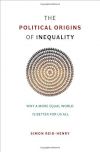
The political origins of inequality
Why a More Equal World is Better for Us All
Reviewer: Christine Shields, Shields Economics
Inequality is the defining issue of our time. But it is not just a problem for the rich world. It is the global 1% that now owns fully half the world's wealth-the true measure of our age of inequality. In this historical tour de force, Simon Reid-Henry rewrites the usual story of globalization and development as a story of the management of inequality.
Platform Revolution
How Networked Markets Are Transforming The Economy
Reviewer: Mark Cleary, Kinetic Economics
Facebook, PayPal, Alibaba, Uber-these seemingly disparate companies have upended entire industries by harnessing a single phenomenon: the platform business model. Platform Revolution delivers the first comprehensive analysis of how platforms use technology to match producers and consumers in a multisided marketplace, unlocking hidden resources and creating new forms of value.

The Man Who Knew
The Life & Times of Alan Greenspan
Reviewer: Ian Harwood, Independent Economic & Investment Consultant
Shortlisted for the FT/McKinsey Business Book of the Year Award, this is the biography of one of the titans of financial history over the last fifty years.

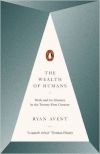
The Wealth of Humans
Work and its Absence in the Twenty‑first Century
Reviewer: Andrew Sentance, Senior Economic Adviser, PwC and former MPC member
To work is human, yet the world of work is changing fast, and in unexpected ways. With rapid advances in information technology, huge swathes of the job market - from cleaners and drivers to journalists and doctors - are being automated: a staggering 47% of American employment is at risk of automation within the next two to three decades. At the same time, millions more jobs are being created. What does the future of work hold?
The Disruption Dilemma
Reviewer: David Lancefield, Partner, PwC
"Disruption" is a business buzzword that has gotten out of control. Today everything and everyone seem to be characterized as disruptive – or, if they aren't disruptive yet, it's only a matter of time before they become so. In this book, Joshua Gans cuts through the chatter to focus on disruption in its initial use as a business term, identifying new ways to understand it and suggesting new tools to manage it.

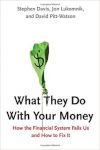
What they Do with your Money
How the financial System Fails us and How to Fix it
Reviewer: Vicky Pryce, Board member of CEBR
A call to reboot capitalism and preserve $85 trillion in retirement savings for their owners-not for use as the financial industry's ATM. Each year we pay billions in fees to those who run our financial system. The money comes from our bank accounts, our pensions, our borrowing, and often we aren't told that the money has been taken. These billions may be justified if the finance industry does a good job, but as this book shows, it too often fails us.
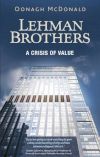
Lehman Brothers: A Crisis of Value
Reviewer: Rosemary Connell, Consultant
Using extensive documentary evidence and interviews with former Lehman employees, Oonagh McDonald reveals the decisions that led to Lehman's collapse, investigates why the government refused a bail-out and whether the implications of this refusal were fully understood. In clear and accessible language she demonstrates both the short and long term effects of Lehman's collapse.
Rewriting the Rules of the American Economy
Reviewer: Matthew Whittaker, Chief Economist, Resolution Foundation
Inequality is a choice. The United States bills itself as the land of opportunity, a place where anyone can achieve success and a better life through hard work and determination. But the facts tell a different story-the U.S. today lags behind most other developed nations in measures of inequality and economic mobility. In this book, Stiglitz suggests a whole menu of policy changes to move the US toward a more widely shared prosperity.

Success and Luck
Reviewer: Matthew Whittaker, Chief Economist, Resolution Foundation
From New York Times bestselling author and economics columnist Robert Frank, a compelling book that explains why the rich underestimate the importance of luck in their success, why that hurts everyone, and what we can do about it.

China's Next Strategic Advantage
Reviewer: Sunil Krishnan, Head of Global Asset Allocation, Hermes Investment Management
The history-making development of the Chinese economy has entered a new phase. China is moving aggressively from a strategy of imitation to one of innovation. Driven both by domestic needs and by global ambition, China is establishing itself at the forefront of technological innovation. Experts George Yip and Bruce McKern explain this epic transformation and propose strategies for both Western and Chinese companies.

Finding Time: the economics of work‑life conflict
Reviewer: David Lancefield, Global Leader of Economics and Policy, PwC
Employers today are demanding more and more of employees time. And from campaign barbecues to the blogosphere, workers across the United States are raising the same worried question: How can I get ahead at my job while making sure my family doesn t fall behind?Heather Boushey argues that resolving work-life conflicts is as vital for individuals and families as it is essential for realizing the country s productive potential.

The New Case for Gold
Reviewer: Jill Leyland, Formerly Economic Adviser, World Gold Council
In The New Case for Gold, James Rickards explains why gold is one of the safest assets for investors in times of political instability and market volatility, and how every investor should look to add gold to his or her portfolio.

Policy Stability and Economic Growth
Reviewer: Vicky Pryce, Former Joint Head of the Government Economic Service

The End of Alchemy
Money, Banking, and the Future of the Global Economy
Reviewer: Andrew Sentance, Senior Economic Adviser, PwC
Something is wrong with our banking system. We all sense that, but Mervyn King knows it firsthand; his ten years at the helm of the Bank of England, including at the height of the financial crisis, revealed profound truths about the mechanisms of our capitalist society. In The End of Alchemy he offers us an essential work about the history and future of money and banking, the keys to modern finance.

Progress and Confusion
The State of Macroeconomic Policy
Reviewer: Vicky Pryce, Former Joint Head of the Government Economic Service
What will economic policy look like once the global financial crisis is finally over? Will it resume the pre-crisis consensus, or will it be forced to contend with a post-crisis "new normal"? Have we made progress in addressing these issues, or does confusion remain? In April of 2015, the International Monetary Fund gathered leading economists, both academics and policymakers, to address the shape of future macroeconomic policy. This book is the result, with prominent figures – including Ben Bernanke, Lawrence Summers, and Paul Volcker – offering essays that address topics that range from the measurement of systemic risk to foreign exchange intervention.
