
Fifty Things That Made The Modern Economy
Reviewer: Sunil Krishnan
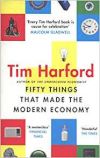
The world economy defies comprehension. A continuously-changing system of immense complexity, it offers over ten billion distinct products and services, doubles in size every fifteen years, and links almost every one of the planet's seven billion people. It delivers astonishing luxury to hundreds of millions. It also leaves hundreds of millions behind, puts tremendous strains on the ecosystem, and has an alarming habit of stalling. Nobody is in charge of it. Indeed, no individual understands more than a fraction of what's going on. How can we make sense of this bewildering system on which our lives depend?
The National Debt
A short history
Reviewer: William Allen
While it is central to today's politics, few people fully understand the National Debt and its role in shaping the course of British history. Without it, Britain would not have gained–and lost–two empires, nor won its wars against France and Germany.
From medieval times to the 2008 financial crash and beyond, The National Debt explores the changing fortunes of the Debt, and so of Great Britain.

Reputation
What it is and Why it Matters
Reviewer: Kevin Gardiner
A compelling exploration of how reputation affects every aspect of contemporary life Reputation touches almost everything, guiding our behavior and choices in countless ways.
2 comments

How Economic Professors Can Stop Failing Us
The Discipline at a Crossroads
Reviewer: Kevin Gardiner
This book provides an eye-opening expose on economics professors that will surely shock anyone who is not familiar with the topic, and even some of those who are familiar with it. It is critical of the behavior of economics professors, but is not critical of the field of economics itself.

Adam Smith: What He Thought and Why It Matters
Reviewer: Bridget Rosewell
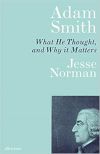
Adam Smith is now widely regarded as 'the father of modern economics' and the most influential economist who ever lived. But what he really thought, and what the implications of his ideas are, remain fiercely contested. Was he an eloquent advocate of capitalism and the freedom of the individual? Or a prime mover of 'market fundamentalism' and an apologist for inequality and human selfishness? Or something else entirely? Jesse Norman's brilliantly conceived \book gives us not just Smith's economics, but his vastly wider intellectual project. Against the turbulent backdrop of Enlightenment Scotland, it lays out a succinct and highly engaging account of Smith's life and times, reviews his work as a whole and traces his influence over the past two centuries.
Red Flags
Why Xi’s China Is In Jeopardy
Reviewer: Keith Wade, Chief Economist, Schroders
A trusted economic commentator provides a penetrating account of the threats to China's continued economic rise Under President Xi Jinping, China has become a large and confident power both at home and abroad, but the country also faces serious challenges. In this critical take on China's future, economist George Magnus explores four key traps that China must confront and overcome in order to thrive: debt, middle income, the Renminbi, and an aging population.

Populism and Economics
Reviewer: Dame Kate Barker, Chairman of Trustees, British Coal Staff Superannuation Scheme
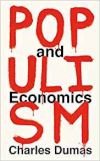
Populism and Economics, Charles Dumas' latest book, examines the reasons for the rise in populism - Brexit and the election of Trump among other events - and how this discontent with the status quo has affected economics, both perceptions and reality.
The Value of Everything
Making and Taking in the Global Economy
Reviewer: Rosemary Connell
Who really creates wealth in our world? And how do we decide the value of what they do? In modern capitalism, value-extraction - the siphoning off of profits, from shareholders' dividends to bankers' bonuses - is rewarded more highly than value-creation- the productive process that drives a healthy economy and society. We misidentify takers as makers, and have lost sight of what value really means. Yet, argues Mariana Mazzucato in this penetrating and passionate new book, if we are to reform capitalism we urgently need to rethink where wealth comes from. Who is creating it, who is extracting it, and who is destroying it?

The Growth Delusion
The Wealth and Well‑Being of Nations
Reviewer: Dr Rebecca Harding, CEO, Coriolis Technologies
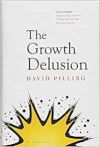
In The Growth Delusion, author and prize-winning journalist David Pilling explores how economists and their cult of growth have hijacked our policy-making and infiltrated our thinking about what makes societies work. Our policies are geared relentlessly towards increasing our standard measure of growth, Gross Domestic Product. By this yardstick we have never been wealthier or happier. So why doesn't it feel that way? Why are we living in such fractured times, with global populism on the rise and wealth inequality as stark as ever?
The Myth of Independence
How Congress Governs the Federal Reserve
Reviewer: William Allen
Born out of crisis a century ago, the Federal Reserve has become the most powerful macroeconomic policymaker and financial regulator in the world. The Myth of Independence traces the Fed's transformation from a weak, secretive, and decentralized institution in 1913 to a remarkably transparent central bank a century later.

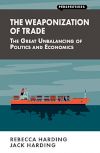
The Weaponization of Trade
The Great Unbalancing of Politics and Economics
Reviewer: Ian Bright
Trade is being weaponized – and this is not good. As politicians on both sides of the Atlantic raise the stakes, trade is increasingly a tool of coercion to achieve strategic influence. This book looks at the risks for us all as trade becomes an instrument of foreign policy, and it shows how politicians could turn things around.
Till Time’s Last Sand
A History of the Bank of England
Reviewer: Kevin Gardner, Economics & Intl Divisions, Bank of England (1982-86)
David Kynaston was born in Aldershot in 1951. He has been a professional historian since 1973 and has written eighteen books, including The City of London (1994-2001), a widely acclaimed four-volume history, and W.G.'s Birthday Party, an account of the Gentleman vs. the Players at Lord's in July 1898. He is the author of Austerity Britain, 1945-51, the first title in a series of books covering the history of post-war Britain (1945-1979) under the collective title 'Tales of a New Jerusalem'. He is currently a visiting professor at Kingston University.

Edge of Chaos
Why Democracy Is Failing to Deliver Economic Growth‑and How to Fix It
Reviewer: Rosemary Connell
In Edge of Chaos, Dambisa Moyo sets out the new political and economic challenges facing the world, and the specific, radical solutions needed to resolve these issues and reignite global growth. Dambisa enumerates the four headwinds of demographics, inequality, commodity scarcity and technological innovation that are driving social and economic unrest, and argues for a fundamental retooling of democratic capitalism to address current problems and deliver better outcomes in the future.

The Political Power of Global Corporations
Reviewer: Christine Shields
In this book, John Mikler re–casts global corporations as political actors with complex identities and strategies. Debunking the idea of global corporations as exclusively profit–driven entities, he shows how they seek not only to drive or modify the agendas of states but to govern in their own right. He also explains why we need to re–territorialize global corporations as political actors that reflect and project the political power of the states and regions from which they hail.

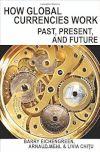
How Global Currencies Work - Past, Present and Future
Reviewer: William A Allen, National Institute of Economic & Social Research
Offering a new history of global finance over the past two centuries, and marshalling extensive new data to test established theories of how global currencies work, Barry Eichengreen, Arnaud Mehl, and Livia Chitu argue for a new view, in which several national monies can share international currency status, and their importance can change rapidly.
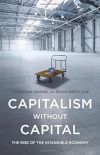
Capitalism without Capital
The rise of the intangible economy
Reviewer: Matthew Whittaker
The first comprehensive account of the growing dominance of the intangible economy Early in the twenty-first century, a quiet revolution occurred. For the first time, the major developed economies began to invest more in intangible assets, like design, branding, R&D, or software, than in tangible assets, like machinery, buildings, and computers.
After the Flood
How the Great Recession changed Economic Thought
Reviewer: Bridget Rosewell, Volterra Partners & Atom Bank
The past three decades have been characterized by vast change and crises in global financial markets and not in politically unstable countries but in the heart of the developed world, from the Great Recession in the United States to the banking crises in Japan and the Eurozone. A momentous collection of the best recent scholarship, After the Flood illustrates both the scope of the crises' impact on our understanding of global financial markets and the innovative processes whereby scholars have adapted their research to gain a greater understanding of them.

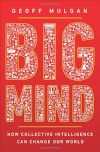
Big Mind
How collective intelligence can change our world
Reviewer: Catherine Connolly
A new field of collective intelligence has emerged in the last few years, prompted by a wave of digital technologies that make it possible for organizations and societies to think at large scale. This "bigger mind"–human and machine capabilities working together–has the potential to solve the great challenges of our time. So why do smart technologies not automatically lead to smart results? Gathering insights from diverse fields, including philosophy, computer science, and biology, Big Mind reveals how collective intelligence can guide corporations, governments, universities, and societies to make the most of human brains and digital technologies.
Central Banks into the Breach
From Triumph to Crisis and the Road Ahead
Reviewer: Dame Kate Barker
Central banks play an important role in the course of national economies and the global economy. Their leaders are regularly feted or vilified, their policy pronouncements highly anticipated and routinely scrutinized. This is all the more so since the global financial crisis.
The past fifteen years in monetary policy is essentially the story of two mistakes and one triumph, argues Pierre L. Siklos, a professor of economics at Wilfrid Laurier University. One mistake was that central bankers underestimated the connection between finance and the real economy. The other was a failure to realize how inter-connected the world's financial system had become. The triumph, in turn, was the recognition that price stability is a desirable objective.

Rebuilding Macroeconomic Theory
Oxford Review of Economic Policy, Volume 34, Numbers 1‑2, Spring‑Summer 2018. ISSN 0266‑903X
Reviewer: Kevin Gardiner
In this paper the authors review the Rebuilding Macroeconomic Theory Project, in which they asked a number of leading macroeconomists to describe how the benchmark New Keynesian model might be rebuilt, in the wake of the 2008 crisis. The need to change macroeconomic theory is similar to the situation in the 1930s, at the time of the Great Depression, and in the 1970s, when inflationary pressures were unsustainable. Four main changes to the core model are recommended: to emphasize financial frictions, to place a limit on the operation of rational expectations, to include heterogeneous agents, and to devise more appropriate microfoundations. Achieving these objectives requires changes to all of the behavioural equations in the model governing consumption, investment, and price setting, and also the insertion of a wedge between the interest rate set by policy-makers and that facing consumers and investors. In the author's view, the result will not be a paradigm shift, but an evolution towards a more pluralist discipline.
1 comment
