
The Deficit Myth:
Modern Monetary Theory and the Birth of the People’s Economy
Reviewer: Melissa Davies
The Deficit Myth, by Stephanie Kelton, is a wonderful introduction to the ‘through-the-looking-glass’ economics of Modern Monetary Theory – the increasingly fashionable challenger to the orthodox thinking that has dominated macro policy-making since the taming of the Great Inflation

The Economics of Belonging:
A Radical Plan to Win Back the Left Behind and Achieve Prosperity
Reviewer: Matt Whittaker
A radical new approach to economic policy that addresses the symptoms and causes of inequality in Western society today Fueled by populism and the frustrations of the disenfranchised, the past few years have witnessed the widespread rejection of the economic and political order that Western countries built up after 1945. Political debates have turned into violent clashes between those who want to "take their country back" and those viewed as defending an elitist, broken, and unpatriotic social contract.

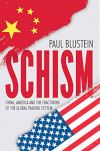
Schism
China, America and the Fracturing of the Global Trading System
Reviewer: Rebecca Harding
China's entry into the World Trade Organization (WTO) in 2001 was heralded as historic, and for good reason: the world's most populous nation was joining the rule-based system that has governed international commerce since World War II. But the full ramifications of that event are only now becoming apparent, as the Chinese economic juggernaut has evolved in unanticipated and profoundly troublesome ways.
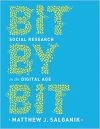
Bit by Bit
Social Research in the Digital Age
Reviewer: Ian Bright
An innovative and accessible guide to doing social research in the digital age In just the past several years, we have witnessed the birth and rapid spread of social media, mobile phones, and numerous other digital marvels. In addition to changing how we live, these tools enable us to collect and process data about human behavior on a scale never before imaginable, offering entirely new approaches to core questions about social behaviour.
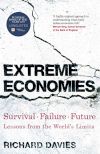
Extreme Economies:
Survival, Failure, Future - Lessons from the World’s Limits
Reviewer: Dame Kate Barker
In search of a fresh perspective on the modern economy, Extreme Economies takes the reader off the beaten path, introducing people living at the world’s margins. From disaster zones and displaced societies to failed states and hidden rainforest communities, the lives of people who inhabit these little-known places tend to be ignored by economists and policy makers. Leading economist Richard Davies argues that this is a mistake, and explains why the world’s overlooked extremes offer a glimpse of the forces that underlie human resilience, help markets to function and cause them to fail, and will come to shape our collective future.
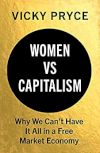
Women vs Capitalism:
Why We Can’t Have It All in a Free Market Economy
Reviewer: Ian Bright
The free market as we know it cannot produce gender equality. This is the bold but authoritative argument of Vicky Pryce, the government's former economics chief.
1 comment
The Wealth Effect:
How the great expectations of the middle class have changed the politics of banking crises
Reviewer: William Allen
The politics of major banking crises has been transformed since the nineteenth century. Analyzing extensive historical and contemporary evidence, Chwieroth and Walter demonstrate that the rising wealth of the middle class has generated 'great expectations' among voters that the government is responsible for the protection of this wealth.
Radical Uncertainty
Decision‑Making or an Unknowable Future
Reviewer: Vicky Pryce
We do not know what the future will hold. But we must make decisions anyway. So we crave certainties which cannot exist and invent knowledge we cannot have. But humans are successful because they have adapted to an environment that they understand only imperfectly. Throughout history we have developed a variety of ways of coping with the radical uncertainty that defines our lives.
1 comment
Central Banking in Turbulent Times
Reviewer: Mario Pisani
Central Banking in Turbulent Times examines fundamental questions about the central banking system, asking whether the model of an independent central bank devoted to price stability is the final resting point of a complex development that started centuries ago. It dissects the hypothesis that the Great Recession has prompted a reassessment of that model; a renewed emphasis on financial stability has emerged, possibly vying for first rank in the hierarchy of objectives of central banks.

Bloomberg by Bloomberg
Reviewer: Ian Harwood
Michael Bloomberg rose from middle-class Medford, Massachusetts to become a pioneer of the computer age, mayor of New York, one of the world's most generous philanthropists, and one of America's most respected—and fearless—voices on gun violence, climate change, public health, and other issues. And it all happened after he got fired at the age of 39. This is his story, told in his own words and in his own candid style.

Narrative Economics:
How Stories Go Viral and Drive Major Economic Events
Reviewer: Bridget Rosewell
In a world in which internet troll farms attempt to influence foreign elections, can we afford to ignore the power of viral stories to affect economies? In this groundbreaking book, Nobel Prize-winning economist and New York Times best-selling author Robert Shiller offers a new way to think about the economy and economic change. Using a rich array of historical examples and data, Shiller argues that studying popular stories that affect individual and collective economic behavior - what he calls "narrative economics" - has the potential to vastly improve our ability to predict, prepare for, and lessen the damage of financial crises, recessions, depressions, and other major economic events.
1 comment
Gaming Trade:
Win‑Win Strategies for the Digital Era
Reviewer: Ian Bright
Trade is no longer just the ships, planes and lorries that move the goods we buy around the world or the services we consume either physically or digitally. While trade still plays a fundamental role in achieving economic targets and promoting growth, it is also, in the modern era, an instrument of state strategy in the contest for international influence and power.

More: the 10,000 Year Rise of the World Economy
Reviewer: Rosemary Connell
More tracks the development of the world economy, starting with the first obsidian blades that made their way from what is now Turkey to the Iran-Iraq border 7000 years before Christ, and ending with the Sino-American trade war that we are in right now.

Not Working:
Where Have All The Good Jobs Gone?
Reviewer: Kevin Gardiner
Don't trust low unemployment numbers as proof that the labor market is doing fine—it isn't. Not Working is about those who can’t find full-time work at a decent wage—the underemployed—and how their plight is contributing to widespread despair, a worsening drug epidemic, and the unchecked rise of right-wing populism.

Beyond Brexit: A Programme for UK Reform
Reviewer: Neville R Norman, University of Melbourne
The National Institute of Economic and Social Research asked Llewellyn Consulting and Gatehouse Advisory Partners to commission a special collection of papers on the problems faced by Britain that go beyond Brexit per se for the 250th issue of its quarterly Review. The papers under the auspices of the newly established Policy Reform Group provide an agenda for the reform of the British political, economic and administrative landscape that will help secure a more robust future for the peoples of these islands.
Productivity and Bonus Culture
Reviewer: Dame Kate Barker
Living standards in the UK and US are in danger of falling. A decline in growth due to poor productivity and an unfavourable change in demography has weakened the stand of liberal democracy, and voter dissatisfaction is encouraging populist policies that threaten even worse outcomes. Whilst living standards once grew faster than productivity they now grow more slowly, and the working population is no longer growing faster than the population as a whole. To avoid falling living standards the productivity problem must be addressed.
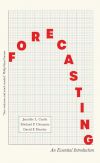
Forecasting: an essential introduction
Reviewer: Kevin Gardiner, Rothschild & Co
In this accessible and engaging guide, David Hendry, Michael Clements, and Jennifer Castle provide a concise and highly intuitive overview of the process and problems of forecasting.
Capitalism in America
Reviewer: Christine Shields
In Capitalism in America, Alan Greenspan, legendary Chair of the Federal Reserve, distils a lifetime of grappling with these questions into a profound assessment of the decisive drivers of the US economy over the course of its history. In partnership with Economist journalist and historian Adrian Wooldridge, he unfolds a tale of vast landscapes, titanic figures and triumphant breakthroughs as well as terrible moral failings.

The AI Economy:
Work, Wealth and Welfare in the Robot Age
Reviewer: Vicky Pryce, CEBR
Tackling the implications of Artificial Intelligence on growth, productivity, inflation and the distribution of wealth and power, THE AI ECONOMY also examines coming changes to the the way we educate, work and spend our leisure time.

Nine Crises:
50 years of covering the British economy - from devaluation to Brexit
Reviewer: Dr Rebecca Harding, CEO, Coriolis Technologies
Veteran financial journalist William Keegan has seen it all, from the 1967 devaluation to the three-day week, from Black Wednesday to the global financial crash of 2007 08. In a career that has seen him hop from Fleet Street to the Old Lady of Threadneedle Street and back again, he has nurtured connections with Chancellors of the Exchequer, Governors of the Bank of England, influential economists and Fleet Street legends.
