
How the Internet Became Commercial
Reviewer: Mark Cleary, Kinetic Economics
In less than a decade, the Internet went from being a series of loosely connected networks used by universities and the military to the powerful commercial engine it is today. This book describes how many of the key innovations that made this possible came from entrepreneurs and iconoclasts who were outside the mainstream–and how the commercialization of the Internet was by no means a foregone conclusion at its outset.
Guide to Country Risk
Reviewer: Mary Davies, Director, EEconomic Policy Associates
Country risk explains the things that can go wrong when business is conducted across borders.

The Remaking of the Mining Industry
Reviewer: Dr Diane Coyle OBE, Director, Enlightenment Economics
The industrialisation of China prompted the biggest commodity boom of modern times. Soaring prices gave rise to talk of a commodity super cycle and induced a wave of resource nationalism. The author, who was chief economist at two of the world's largest mining companies, describes how this resulted in a transformation of the global mining industry.

Phishing for Phools: the economics of manipulation and deception
Reviewer: Dame Kate Barker, Chairman, Society of Business Economists
Ever since Adam Smith, the central teaching of economics has been that free markets provide us with material well-being, as if by an invisible hand. In Phishing for Phools, Nobel Prize-winning economists George Akerlof and Robert Shiller deliver a fundamental challenge to this insight, arguing that markets harm as well as help us. As long as there is profit to be made, sellers will systematically exploit our psychological weaknesses and our ignorance through manipulation and deception. Rather than being essentially benign and always creating the greater good, markets are inherently filled with tricks and traps and will "phish" us as "phools."

The Courage to Act
Reviewer: Ian Harwood, Independent Consultant
In 2006, Ben S. Bernanke was appointed chair of the Federal Reserve, capping a meteoric trajectory from a rural South Carolina childhood to professorships at Stanford and Princeton, to public service in Washington's halls of power. There would be no time to celebrate, however-the burst of the housing bubble in 2007 set off a domino effect that would bring the global financial system to the brink of meltdown. In The Courage to Act, Ben Bernanke pulls back the curtain on the tireless and ultimately successful efforts to prevent a mass economic failure.

Between Debt and the Devil: Money, Credit and Fixing Global Finance
Reviewer: Ian Mulheirn, Director of Consulting, Oxford Economics
Adair Turner became chairman of Britain’s Financial Services Authority just as the global financial crisis struck in 2008, and he played a leading role in redesigning global financial regulation. In this eye-opening book, he sets the record straight about what really caused the crisis. It didn’t happen because banks are too big to fail—our addiction to private debt is to blame.

The Silo Effect
Reviewer: Bronwyn Curtis OBE
In The Silo Effect, Gillian Tett uses an anthropological lens to explore how individuals, teams and whole organisations often work in silos of thought, process and product. With examples drawn from a range of fascinating areas - the New York Fire Department and Facebook to the Bank of England and Sony - these narratives illustrate not just how foolishly people can behave when they are mastered by silos but also how the brightest institutions and individuals can master them.

Urban Economics and Urban Policy: Challenging Conventional Policy Wisdom
Reviewer: Neil Reeder, Director, Head and Heart Economics
In this bold, exciting and readable volume, Paul Cheshire, Max Nathan and Henry Overman illustrate the insights that recent economic research brings to our understanding of cities, and the lessons for urban policy-making. The authors present new evidence on the fundamental importance of cities to economic wellbeing and to the enrichment of our lives. They also argue that many policies have been trying to push water uphill and have done little to achieve their stated aims; or, worse, have had unintended and counterproductive consequences.

Hubris
Why Economists Failed to Predict the Crisis and How to Avoid the Next One
Reviewer: Christine Shields, Shields Economics
The failure of economists to anticipate the global financial crisis and mitigate the impact of the ensuing recession has spurred a public outcry. Economists are under fire, but questions concerning exactly how to redeem the discipline remain unanswered. In this provocative book, renowned economist Meghnad Desai investigates the evolution of economics and maps its trajectory against the occurrence of major political events to provide a definitive answer.
Making Sense of Markets
Reviewer: Ian Harwood, Independent Consultant
In March 2012, the Financial Times carried a front page story headlined 'Years of struggle for a jinxed generation'. It stated that 'For the first time in half a century, young Britons embarking on their careers cannot expect to be any better off than their parents…' Before and since, there have been numerous analyses highlighting a gloomy future ahead, and with little qualification or equivocation. The prevailing consensus since 2007 has been that the economic world is in a dire state. But are things really as bad as all that, or is sloppy thinking and excessively negative sentiment masking a more positive outlook? Making Sense of Markets argues that received wisdom is still far too pessimistic, and that investment opportunities have been missed as a result.

Remembering Inflation
Reviewer: Duncan Brown, UK Commission for Employment & Skills
Today's global economy, with most developed nations experiencing very low inflation, seems a world apart from the "Great Inflation" that spanned the late 1960s to early 1980s. Yet, in this book, Brigitte Granville makes the case that monetary economists and policymakers need to keep the lessons learned during that period very much in mind, lest we return to them by making the same mistakes we made in the past.

Government Paternalism: Nanny State or Helpful Friend?
Reviewer: Neil Reeder, Head and Heart Economics
Should governments save people from themselves? Do governments have the right to influence citizens' behavior related to smoking tobacco, eating too much, not saving enough, drinking alcohol, or taking marijuana–or does this create a nanny state, leading to infantilization, demotivation, and breaches in individual autonomy? Looking at examples from both sides of the Atlantic and around the world, Government Paternalism examines the justifications for, and the prevalence of, government involvement and considers when intervention might or might not be acceptable.

Post‑Capitalism: A guide to our future
Reviewer: Dr Rebecca Harding, Independent Consultant
From Paul Mason, the award-winning Channel 4 presenter, Postcapitalism is a guide to our era of seismic economic change, and how we can build a more equal society.

Classical Liberalism: A primer
Reviewer: Diane Coyle, Enlightenment Economics & University of Manchester
Classical liberalism is one of the most important political and social philosophies. Indeed, this set of ideas was crucial in bringing the modern world into existence.Yet despite its huge contribution, today classical liberalism is poorly understood and often misrepresented, its insights neglected in an era of pervasive state intervention. Eamonn Butler's primer is therefore extremely welcome.

Something Will Turn Up: Britain’s Economy, Past, Present and Future
Reviewer: Andrew Sentance, Senior Economic Adviser, PwC
Overcoming economic decline, inflation and mass unemployment have challenged successive Chancellors of the Exchequer. Britain's leading economic journalists explains why some of them have made a better fist of it than others.
The Lion Wakes – a Modern History of HSBC
Reviewer: Bill Allen, Economic Consultant
The Lion Wakes tells the modern story of HSBC, starting in the late 1970s, when the bank first broke out of the Asia-Pacific region with its purchase of Marine Midland Bank in the US. It follows HSBC's battle to purchase Midland Bank in1992, the subsequent move of head office from Hong Kong to London, and the string of acquisitions that brought the bank to its pre-eminent place in global finance today. Acclaimed historians Richard Roberts and David Kynaston chronicle the bank's struggles as well as its successes: the last part of the book deals with the ill-fated move into consumer finance in the US, as well as the financial crisis of 2008 and its effect on HSBC. Impeccably researched and generously illustrated from the HSBC archives, this is a valuable addition to global financial history.

The Trouble with Europe
Reviewer: Donald Anderson
The EU needs fundamental reform: it has not delivered the prosperity and growth it promised; the euro has turned out to be part of the problem rather than the solution; the EUs share of world GDP is set to fall sharply. This updated and expanded edition of Roger Bootle s critically acclaimed book includes new material on federal union, policies to avert catastrophe in the Eurozone (including the Greek situation) and mass migration.
Wildcat Currency: How the Virtual Money Revolution is Transforming the Economy
Reviewer: Nigel Dodd, Professor of Sociology, London School of Economics
Today's economy has seen an explosion of new forms of monetary exchange not created by the federal government. Credit card companies offer points that can be traded in for a variety of goods and services, from airline miles to online store credit. Online game creators have devised new mediums of electronic exchange that turn virtual money into real money. In this dynamic and essential work, Edward explores the current phenomenon of virtual currencies and what it will mean legally,

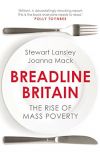
Breadline Britain. The rise of mass poverty
Reviewer: Rosemary Connell
Poverty in Britain is at post-war highs and - even with economic growth -is set to increase yet further. Food bank queues are growing, levels of severe deprivation have been rising, and increasing numbers of children are left with their most basic needs unmet.
Based on exclusive access to the largest ever survey of poverty in the UK, and its predecessor surveys in the 1980s and 1990s, Stewart Lansley and Joanna Mack track changes in deprivation and paint a devastating picture of the reality of poverty today and its causes.
Misbehaving: How Economics Became Behavioural
Reviewer: Ian Bright
Why are we more likely to forgo the opportunity to sell a £100 bottle of wine rather than actually taking money out our wallet to pay for it, when ultimately the 'opportunity cost' of doing so is the same? Why would the 'endowment effect' mean that we value a free ticket worth hundreds of pounds more than the money we would get from selling it? In this new, ambitious work, Thaler presents his findings in behavioural economics and breaks down the biases and irrational tendancies in our thinking, showing us how to avoid making costly mistakes in life.
