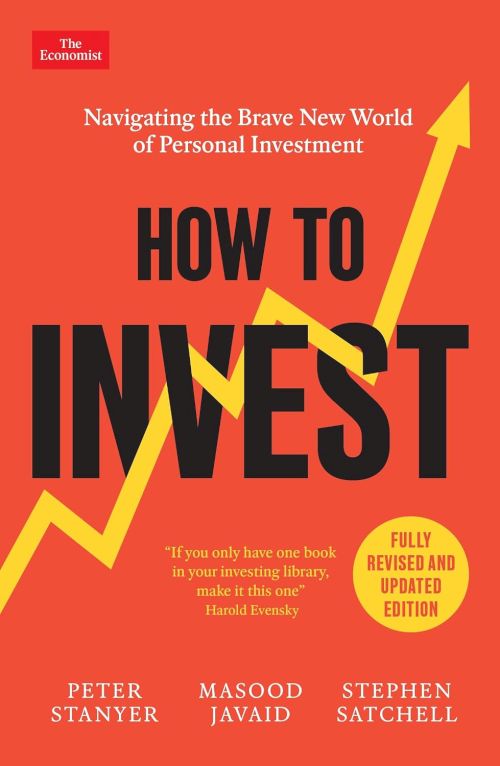
This book provides a lively summary of the latest research into how to invest in an uncertain world, infused with the extensive hands-on experience of the authors. For beginners to investing there would be a lot to digest, though they could learn an enormous amount. It is likely to be of most interest to those with some knowledge of economics and markets, trying to steer their investments on their own or with an adviser. For professional investment managers and advisers, it should be essential reading.
It is certainly not a ‘get rich quick’ manual. The authors argue that ‘financial markets are not a reliable place to grow wealthy’ but rather are ‘a place to protect and grow wealth’. The general message is the advisability of diversification and the need to be cautious about any particular strategy for beating the market. A simple approach is best, with a focus on keeping costs low.
The book opens with a list of 22 key principles to help investors make sensible decisions. Many are familiar warnings. For example, number 1: ‘Always look for the substance in any investment proposal’. Or number 5: ‘If you see easy money to be made in the stock market or anywhere else, you have not looked hard enough’. But some are less obvious. For example, number 2: ‘When investing, your most important decision is often not what to buy but rather how much of an attractive opportunity to buy’. Or number 4: ‘Not all risks are equal. Risks that might strike at bad times are especially damaging’.
Building on these principles, the authors review the insights from behavioural economics such as overconfidence and anchoring and warn about bubbles, busts, speculation and fraud. Most investors are trying to preserve and build wealth for a comfortable retirement, and the authors rightly focus on the dangers of inflation which can eat away at pension payments and fixed income investments. Their wise conclusion is that ‘we will only know with the benefit of hindsight whether fluctuations in inflation and interest rates are now tethered to historically low levels’. Given the uncertainty, investors need to look for at least some protection against inflation and the authors explore the options including inflation-protected bonds, equities and property.
The investment world is full of controversy, and the book does not shy away from taking positions. Should you invest only in familiar stock markets or adopt a global approach? Go global. Should you invest in crypto? No, unless you accept it is purely a speculation. Do illiquid investments offer higher returns simply because they are illiquid? No. Should you follow a particular investment style, such as value or growth investing? The authors examine the evidence but caution that ‘strongly held and apparently well-founded views can underperform for much longer periods than most investors can easily tolerate’.
So, amidst the warnings and cautions, does the book offer a roadmap for investors? I think it does, though it emerges from the discussion rather than being made explicit. The key is the chapter on model portfolios. Self-advised investors often accumulate a bundle of their best ideas over time, rather than starting from a model portfolio. But faced with an economic crisis or market crash, they may be at sea. Worse, their mix of funds and securities may all fall in value at the same time, just when their job or business is itself at risk. Investment advisors usually rely heavily on model portfolios and the authors approve, arguing that models help to set initial risk parameters and also, very importantly, anchor decision-making in bad times.
Much of the rest of the book sets out what should or maybe should not be in the portfolio, covering public equities and bonds, private equity and debt, crypto and gold, hedge funds, real estate and even art. Equities are likely to be a core part of most people’s portfolio provided they have a long enough time horizon. The authors suggest that ‘the diversification benefits of a fully global equity tracker often make it a sensible way to invest’. While the format is condensed the book summarises the essential points and offers a long list of further reading. The reader is likely to emerge with a better sense of the risks and opportunities in different investment options, together with a degree of humility over how much we can forecast their performance with any degree of confidence. Be careful out there!
More Book Reviews
All Reviews
Bust: The Economics of Population Decline
This is a book that argues for a broad package of cultural and policy reforms to stave off the menace of an aging population. In that sense it might be similar...
To Think Like a Statistician
Statistics professor Susan Holmes said that statistics is like Poland, perpetually surrounded by powerful neighbours — probability, mathematics, applied...
Exile Economics: Tariffs, Trade Wars and the Future After Globalisation
Ben Chu addresses the challenge to global trade triggered by Donald Trump’s erratic tariff policy. His background and skills as an economics journalist are...